
political, material, and sensory natures of site, place, and space
Performing Mersea Island: Out of Place online
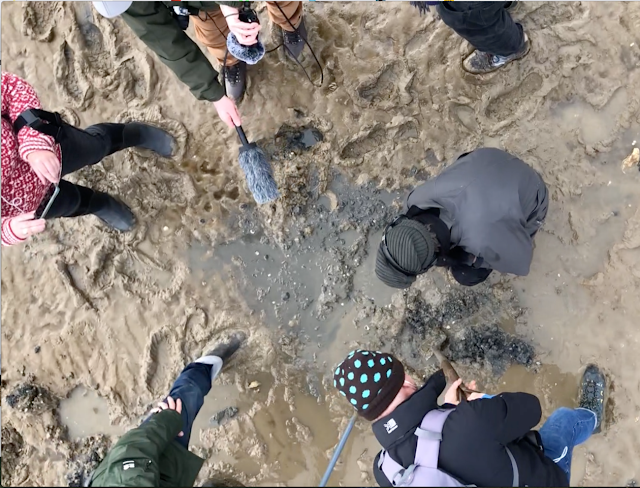
For its exhibition at APT Gallery, sensingsite presented a collective, material and sensory response to Mersea Island, situated off the south coast of Essex. Restricted by the Coronavirus lockdown of 2021-2, virtual online ‘visits’ led to a critical awareness of how they might experience place during their later physical visits.
Mersea Island is a dynamic and changing place where the effects of climate change and sea level rise are already evident. Unruly collective dialogue with changing terrains and currents (audio and visual) was configured in the architectural site of the gallery as physical and ephemeral assemblages with varying powers of affect. Together, the virtual and physical onsite work has been re-created to make this new site work.

Performing Mersea Island: Out of Place, APT Gallery, Deptford, 6 - 16 July 2023
Exhibition
6 - 16 July 2023
Discussion and Private View
APT Gallery
Performing Mersea Island

For more details see the Mersea Island page
Landfill Audio Report
The piece is available to listen to and download here:
Landfill Audio Report is presented as part of Estuary Festival
For more information see the Landfill Audio Report page
Tentative Mycologies by Difference Exchange
Tentative Mycologies by Difference Exchange (Ben Eastop, Tim Eastop, and John Hartley) is a response to the Approaching Estate and Composting Estate events. As a development of the worming and composting work that Difference Exchange performed as part of those events, Tentative Mycologies breaks down and reworks the conversations from those events to make new connections across and through them.
Composting Estate seminar: Helena Hunter and Mark Peter Wright (Matterlurgy) Water, Air and Ice: Elemental Composting Across Art and Science
 |
| Air_Morphologies, Film Still, Matterlurgy, 2019 |
Composting Estate seminar: Jeremie Magar and Adriana Cobo-Corey 26 June 2020
A series of seminars examining processes and materials of composition and decomposition of site and place.
watch here:


Composting Estate seminar: Kate Corder and Judy Price 28 February 2020
A series of seminars examining processes and materials of composition and decomposition of site and place.
Museum and Study Collection
Central Saint Martins
10.30am – 1.00pm
28 February 2020
Kate Corder


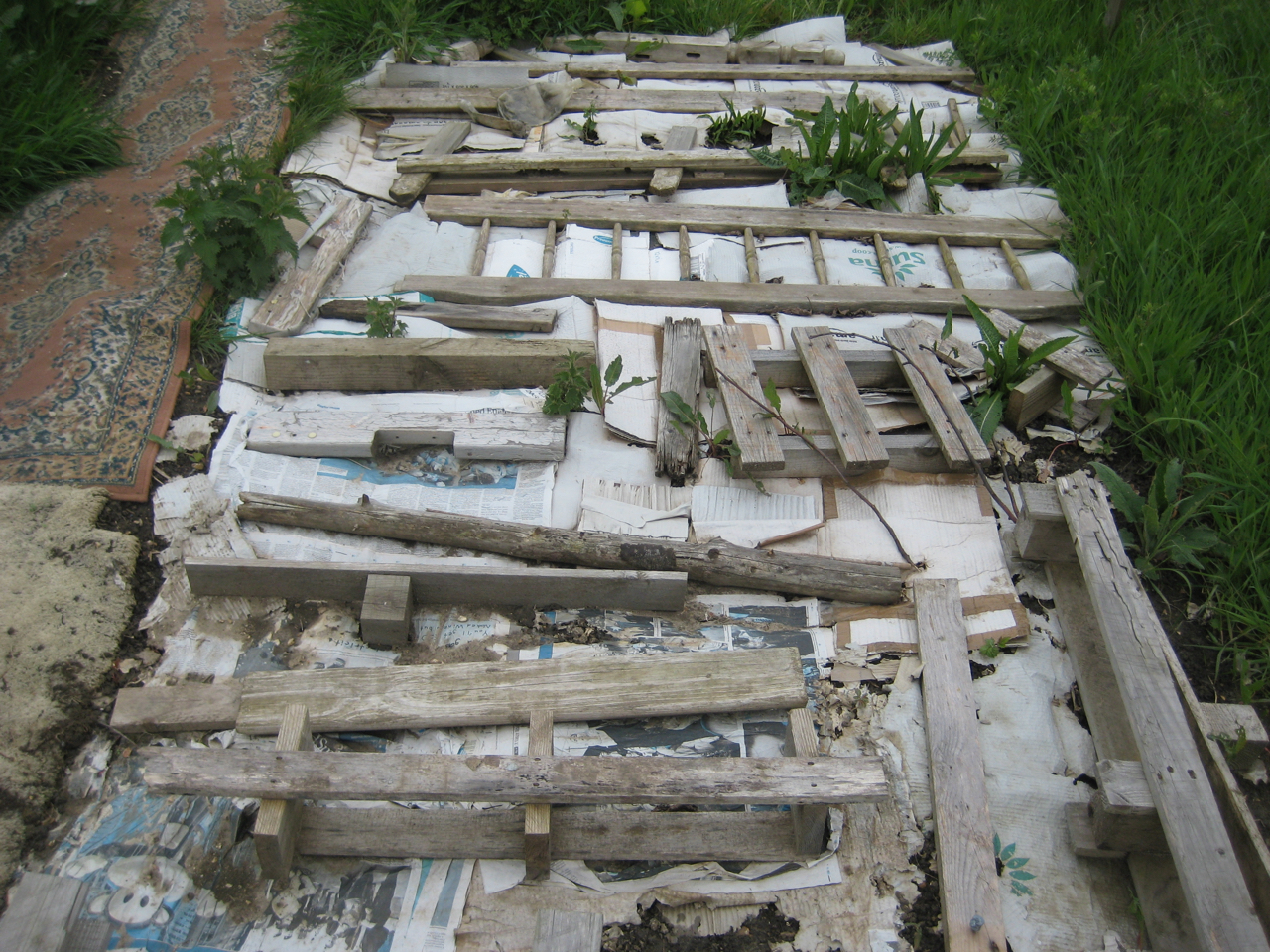

In this presentation I discuss the use of allotment plots as art research study areas. Since completing my PhD titled “The Allotment Plot: Place Tilled - An investigation into plant material, rural labour and cultivation within art practice”, I have continued explorations of allotment plots as a theme in my practice. I investigate the Plot as site, which is subject to environmental occurrences, wildlife agents and human labour; through time all of these things merge, constructing and deconstructing the site.
In reference to Rancière’s ‘the key formula of the aesthetic regime of art is that art is an autonomous form of life’, (the aesthetic revolution and it's outcomes, 118), and Lippard’s and Kaprow’s essays affirming art can become life and life become art, the blurring of these concepts assists my methodology. The Plot activity is situated in everyday life interacting with human and non-human factors. The plot surface is worked and reworked similarly to painting a canvas or a continually adjusted installation. Plant matter is produced and productivity emerges. Actions and observations can be translated through drawings, images, film, installation and creative writing https://ellamontt.wordpress.com from the site to non-site gallery as exhibition.
Allotment Gardens are a social construct originating from the late 18th century, when significant increases in Land Enclosures, loss of work due to new machinery, the Industrial Revolution and European Wars, created food poverty and a need for dedicated land for the working class to cultivate plant-based food. In the 21st Century, land is often contested, so allotment work can still be seen as political activism. Allotment gardens and art in the UK are defined under a governmental taxonomy of leisure (and culture) rather than labour.
My first municipal allotment site, Plot 326, was in a wild state when I received it. The over growing nature of the place became part of my research. My art practice on the plots is mostly invisible to the observer. My processes include photographic images made in to film and arrangements of trees products, cardboard; newspaper and wood layered and rearranged, becoming habitats for wildlife agents. I study making new earth through composting plant-based material, unearthing compost bins and using the earth on the allotment plot influenced by the Harrison’s ‘Spoils’ Pile Reclamation’ (1976-78: ongoing) Art Park process.
Conversations during the presentation dig in to approaches to practice, exhibition translation, accessibility to audience, experience, encounter, limited and practicality of access and whether or not it is a social practice. I find the public is not always human. Questions are asked about the garden being productive for whom; is obtaining a yield, an extraction, or lettings things happen the productivity? Is it more important I cultivate the plot site for the toads to inhabit and encounter? There is no conclusion. Meanwhile translating the site and on going explorations will be developed for further non-site / gallery exhibitions and encounters. (Postscript: During lockdown I took part in Sensingsite zoom meeting 15/05/2020 from Plot 21).
https://www.katecorder.net

 |
| Phoenix Rising (Griffin Mosaic, Holloway Women’s Prison Swimming Pool), 2020, Judy Price. |
Holloway Women’s Prison (1852-2016) was the largest women’s prison in Western Europe and the only women’s prison in London. Its prisoners “included some of the leading freedom fighters of our age, such as the suffragettes [and Greenham Common women], but the vast majority were always imprisoned because of poverty and injustice, addiction and abuse”. The End of the Sentence draws on individual and collective stories of the prison, through the networks, collaborations and relationships Price had developed through the coalition group Reclaim Holloway , which has been actively campaigning for a Women’s Building on the former prison site since it was decommissioned in 2016. The Women’s Building will be a service hub helping vulnerable women stay out of the criminal justice system, a transformational space for the local community, and a positive legacy for the thousands of women held in Holloway prison over its 164-year history.
As part of The End of the Sentence, Price’s moving-image installation The Good Enough Mother explores the incarcerated pregnancy, drawing on transcriptions of 28 interviews by midwife Dr Laura Abbott, as well as the field work and writing of forensic psychotherapist Pamela Windham Stewart. Co-scripted with artist and writer Andrew Conio the script is re-voiced by actors from Clean Break, a women’s theatre company that uses theatre to keep the subject of women in prison on the cultural radar and whose members have lived experience of the criminal justice system.
Price’s photographic work draws on her time spent in the decommissioned Holloway prison building, which she lives directly behind, and the wealth of intimate objects from the prison held in the Islington Museum archives. Photographs of hair and a fire hose plug examine some of the less obvious traces of prison control – in the event of a fire in a cell at HMP Holloway, the small yellow plug was removed from the door and a hose inserted blasting water into the cell, before allowing the inmate to evacuate. Phoenix Rising is an image of the griffin mosaic on the base of the swimming pool installed in Holloway in the 1970s new redevelopment. Many of the incarcerated women referred to the griffin as a phoenix and it is in light of this and the recent campaign for a Women’s Building that Price embellishes the reading of the Griffin as a potential site of transformation.
Price’s research culminated in an exhibition at the Stanley Picker Gallery in 2020 which featured new work by Price, archival material, and artists and writers invited by Price including Erika Flowers, Carly Guest & Rachel Seoighe, Hannah Hull, Katrina McPherson and Nina Ward.
Price is currently developing a long form film with support from the Stanley Picker Gallery, Arts Council England and the Elephant Trust.
The Good Enough Mother
14 minute excerpt of the film
https://vimeo.com/415661508
https://www.stanleypickergallery.org/exhibitions/judy-price/
Composting Estate seminar: Fay Hoolahan and John Wild 7 February 2020
A series of seminars examining processes and materials of composition and decomposition of site and place.
Room A002 Central Saint Martins
10.30am – 1.00pm
7 February 2020
Fay Hoolahan


Around the Park (Trailer) https://youtu.be/5JRbD-ewD3I
A02 On the hill Talking Line Walk 2: https://youtu.be/WOwwQf4gIwE
A03 To the marsh Talking Line Walk 3: https://youtu.be/ksJmBtbgd8E
https://www.fayhoolahan.com
John Wild
Psychogeography in the Digital City


https://sensingsite.blogspot.com/p/composting-estate-series-of-seminars.html
Composting Estate seminar: Pat Naldi and Julie Marsh 24 January 2020
A series of seminars examining processes and materials of composition and decomposition of site and place.
Room A002 Central Saint Martins
10.30am – 1.00pm
24 January 2020
Pat Naldi
Who Owns the Sea?

Who Owns the Sea? is the second in a trilogy of projects that investigate territorial ownership, and its political, societal and psychological impact by and for humans. The first in the trilogy, the video work Who Owns the Land? (2016) takes as its starting point the ad coelum doctrine - a principle of property law in the UK. Originating in the 13th century, this ancient law proclaims the extent of land ownership beyond that of the surface. Although now acceptable in a limited form, real property/estate encompasses airspace, wild animals, trees, plants, flowers, water, mines and minerals above, on, and below the surface of the land. The video work probes land ownership and its societal consequences on public rights, ecological systems, power, and value. Filmed on location across the high moorland and fell landscape of Northumberland and Cumbria (UK), on land surface, horizon, and below ground in disused lead mines, this work, with a view to make transparent the UK’s most valuable asset, asks: Who owns the land? Who owns the ground below? Who owns the sky above?
The second in the trilogy of projects Who Owns the Sea? (the third will be Who Owns the Sky?), has in its early stages of research been informed and influenced by the territorial waters surrounding Gibraltar a politically contested British Overseas Territory located at the southernmost tip of the Iberian Peninsula. A highly contested stretch of sea since the Treaty of Utrecht in 1713, and a near daily site of military, and police incursions resulting in political bickering, these waters are continuously shrinking due to the land reclamation undertaken by both Gibraltar and Algeciras in Spain. Future research and production of a strand of Who Owns the Sea? will be sited on the Arctic Ocean. Acting as ground zero in climate change, the focus of the research will question, explore and address the critical environmental, political, and human impact of sea ownership as experienced through the decreasing Arctic sea ice cap, and its effect on ecosystems, weather patterns, and territorial waters. The Arctic sea ice cover which helps determine the Earth’s climate, fell to its second lowest level in 2019. Humanity is dependent on the ocean and cryosphere. It interconnects with the climate system through water, energy, and carbon. The impact of this melting ice cover is also political, military, and most of all economic as several nations vie for ownership and control over its greater navigable waters – a new Northwest Passage – and the opportunities this will present. Who Owns the Sea? will address these global implications through the local. The research and production expedition to the Arctic Ocean is scheduled for June 2021.
Pat Naldi is a lecturer in MA Contemporary Photography; Practices and Philosophies at Central Saint Martins.
http://www.patnaldi.co.uk/
Julie Marsh
Assembly at Old Kent Road Mosque
 |
| fig 1 |
 |
| fig 2 |
 |
| fig 3 |
 |
| fig 4 |
In September 2019 Assembly moved to a new site; Old Kent Road Mosque renovated from a former pub in Southwark (see fig.3). Old Kent Road Mosque is due for demolition/redevelopment to build a new Islamic centre for the community. Assembly will perform both the main prayer hall and the female prayer hall before the building is demolished in late 2020. The female congregation at Old Kent Road Mosque have built a large, active community, organising many support groups and events. Their prayer space is of equal size and capacity to the main prayer hall directly above. An LCD monitor connects the two spaces as the imam is broadcast live in the female space (see fig.4). Identical rigs will be made in both spaces to reflect the unison of the two congregations via dual moving projections performing both prayer sites in synchronized time and space.
Interviews and research findings from Assembly are being used within a collaborative project led by architect Shahed Saleem and the V&A for the Architecture Biennale in 2020. This project will explore themes of immigration, hybridity and multi-culturalism through three Mosques in London; Brick Lane, Old Kent Road and Harrow. The findings have also been disseminated via the following conferences and journal articles.
Conferences:
• ‘Investigating the interface between Muslim prayer sites and artistic interventions’, Fourteenth International Conference on The Arts in Society, 2019 (Polytechnic Institute of Lisbon)
• ‘Exploring the interface between art and sacred spaces’ Sacred Spiritual Secular Conference, 2019 (School of Architecture- University of Westminster) which led to being nominated for the A+C award (Art and Christianity).
Journal articles:
• ‘Investigating the Interface between Muslim Prayer Sites and Artistic Interventions' The Arts in Society Research Network Journal
• ‘Assembly: Performing the materiality of Muslim prayer spaces’ Scene, intellect journal
• ‘SITE-INTEGRITY’ The Journal for Artistic Research (JAR) https://www.jar-online.net/exposition/abstract/site-integrity-dynamic-exchange-between-site-artist-device-and-audience
Julie Marsh is an artist filmmaker, researcher and senior lecturer at the Centre for Research and Education in Arts and Media (CREAM), University of Westminster. Julie studied at London College of Communication, University of the Arts, London, completing a PhD in 2017.
Information about the full series:
https://sensingsite.blogspot.com/p/composting-estate-series-of-seminars.html
Composting Estate seminar: Ingrid Pumayalla and Greer MacKeogh 10 January 2020
A series of seminars examining processes and materials of composition and decomposition of site and place.
Room A002 Central Saint Martins
10.30am – 1.00pm
10 January 2020
Ingrid Pumayalla
Gathering Organic Matter to Fertilise the Land

Gathering Matter to Fertilize the Land is a presentation of three different site-specific works completed in 2019 in Trujillo (Peru), Stokkoya (Norway) and Leipzig (Germany). They form a trilogy and are linked through narratives of displacement and mythology, also drawing thematically on rural migration as a global phenomenon. These video works invite contemporary audiences to reflect on our human connections with and responsibility towards nature.
The approach I use in my practice is to study the myths and rituals of pre-Columbian cultures in the Andes and the Amazon in order to address the collective loss of nature. The hair (cf. above) is a visio-cultural custom, a repetitive concept and symbol, which I use to state the strength of the female identity in the Andes and its capacity to pass on knowledge.
i) Cantos al Agua is a video-performance made at the sites of Santo Domingo-Huaca el Brujo (100-350 AD) and the city of Chan Chan (850 AD), the first settlements of human habitation being found here on the shore of the Chicama river and dated to 14000 BC. This is the area where the city of Trujillo stands at present. At the archaeological site of el Brujo, the mummified body of the Lady of Cao, the first female governor and priest from the Moche Civilization was found in 2006. Nearby is the Huaca el Brujo, a construction made with adobe, standing 17 metres tall and bearing an open cut that was made during the arrival of the Spanish to the area. The site of Santo Domingo was a ceremonial site at which were found several drawings and symbols of animals and water. In 2016 the largest triple spiral (650 AD) was destroyed because a tractor passed over it, driven by ‘land invaders’. There is a 60,000-inhabitant housing project outside the area at the moment, initiated by the local government and due to the increasing population coming from the Andes towards the coastal cities. The actions used in this work are based on the acts of weaving and chanting as a language to make offerings to the wounded landscape and mourning what has been lost in this land.
ii) On the island of Stokkøya, Norway, there was a landslide that separated the island from the mainland for a period of a month in September of 2019. Three artists are invited every year to this community in order to produce a collaborative piece responding to the landscape and site of Stokkoya. The Bigda 2.0 Project along with the Afjord municipality aim to enhance the rural community, developing infrastructures, making the area more attractive to people who would like to move back to this area from metropolitan conurbations. The increase of heavy industrialization on the land and because of the wind farms used to create clean energy issues have emerged within the natural balance of this place. According to the locals these caused the recent landslide. The piece was made by responding to the event using found material from the landslide. We took the metal from the distorted crash barriers to create a public sculpture along the road opposite to Bygda 2.0. The sculptures were presented with a sound piece by the artists, reading social media output created by the locals when building strategies in order to access the island.
ii) In August of 2019 more than 2 millions of hectares were burned down during fires in the Amazonian rainforest. The fires were started because of the agricultural industrialization of the area aimed at raising cattle for meat consumption. As a response to this I created the video 'Where did the creatures from the forest go?' (20’ 03”). The video presents the myth of Curiwarmi. “The myth tells that Curiwarmi (gold woman) saw the Amazon on fire and she ran to the river to save her life. After a while, because of sadness, she fell sleep. She woke up later on the shore of the Makkelberg Lake, in Saxony, Germany” The video performance includes the creation of knitted pieces in order to narrate the myth performatively using the method through which the old Peruvians used to relate stories in the Quechua language, expressing them through knitting, textiles and pottery.
Videos:
Where did the creatures from the forest go?
Cantos al agua
Ingrid uses performance, photography, moving image and installations to address migration and diasporas, and how the loss of home re-structures and transforms identity. Her work explores the role of art in transforming and repairing loss. Ingrid is a recent graduate of MA Fine Art at CSM and has recently completed residencies in Norway and Germany.
Acts of Hospitality


My research, Acts of hospitality, the role of guest and host as art practice, centres on my experiences as artist, guest and host in three sites in Co. Roscommon in Ireland. As an artist, when working in community-based contexts, I have often embodied the role of either the ‘guest’ - as outsider and innovator, or the ‘host’ – as initiator or facilitator. In this research I endeavour to move between the position of guest and host, interchanging and exploring these perspectives. I understand hospitality as a kind of movement that flows between these subject positions, and a means to account for the various subtle transitions.
I have identified the hotel as an ideal site to explore how these roles of guest and host are played out, contested and expressed. Under the title The Hotel, I set out to trace the complex dynamics of hospitality in rural communities in Ireland, while questioning what might be revealed about wider notions of hospitality on a national and international scale.
My enquiry consists of a body of practical and site-specific research in which the roles of guest and host are explored, disrupted and expanded to produce emergent forms of hospitality. A praxis, of building relationships over time, while exploring the historical and cultural conditions that lie beneath or behind Irish identity, is central to my research into hospitality as art practice.
Greer MacKeogh is an artist-researcher studying for her PhD at UAL.
Information about the full series:
https://sensingsite.blogspot.com/p/composting-estate-series-of-seminars.html